Rivals and Relatives: How Jeff Gordon and the Earnhardts Defined NASCAR’s Modern Era
Dennis Washington November 13, 2025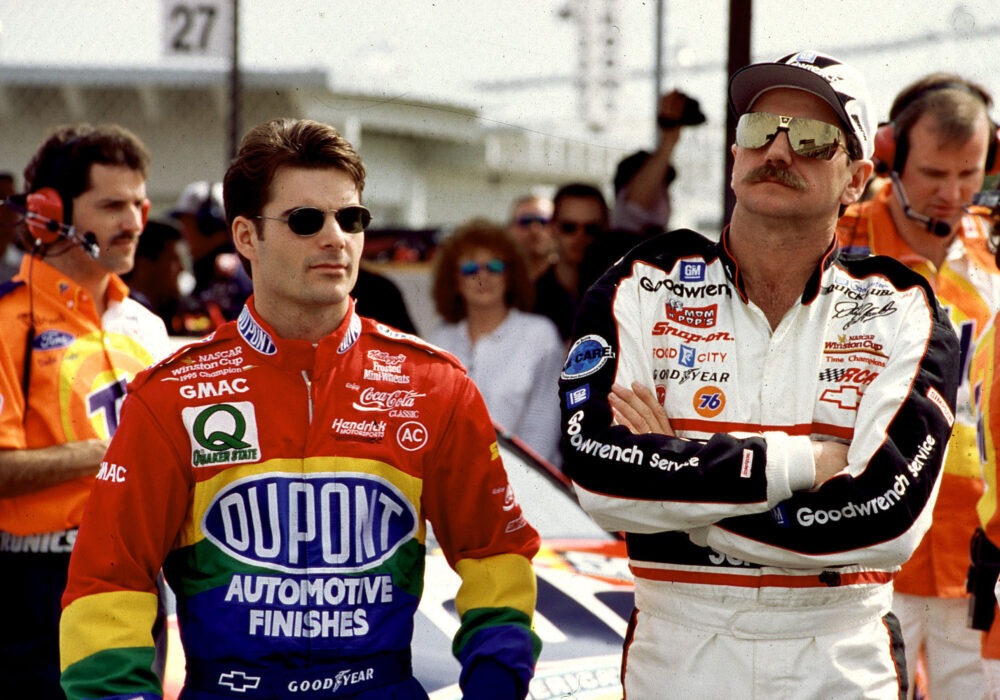
There are rivalries that define moments in sports history, and then there are rivalries that shape the very soul of a sport. In NASCAR, few names ignite as much passion, nostalgia, and respect as Jeff Gordon and the Earnhardt family. What began as a fierce competition between two drivers from vastly different worlds evolved into a complex story of rivalry, respect, and ultimately, legacy. The battles between Gordon and Dale Earnhardt Sr., followed by the connection Gordon built with Dale Earnhardt Jr., formed the backbone of NASCAR’s transformation from a Southern pastime into a national phenomenon.
The Perfect Collision of Eras
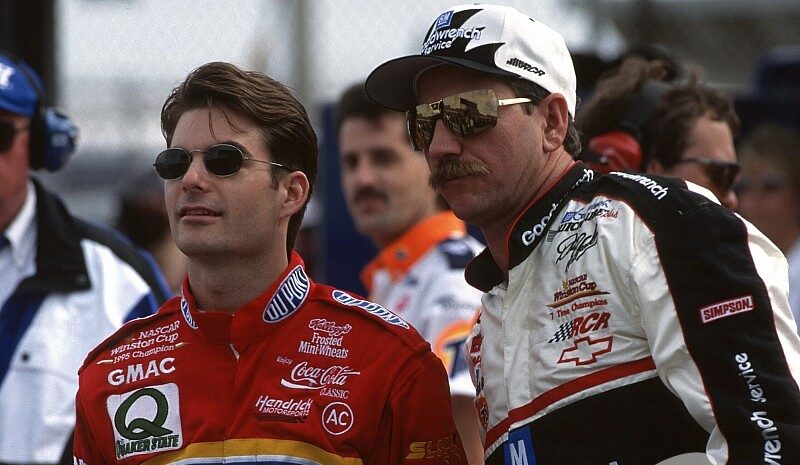
When Jeff Gordon burst onto the NASCAR scene in the early 1990s, the sport was still very much the domain of rough-hewn veterans who had cut their teeth on dirt tracks and short circuits across the South. Dale Earnhardt Sr., known as “The Intimidator,” was the undisputed king of this world. He embodied everything that traditional NASCAR fans loved—toughness, aggression, and an unshakable blue-collar identity.
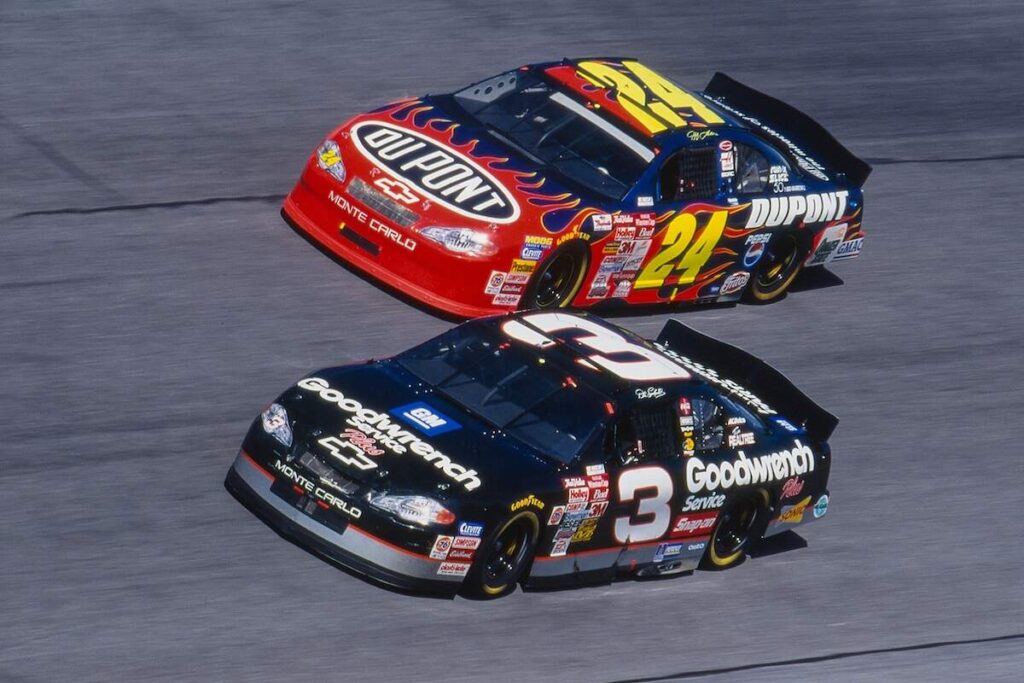
Gordon, on the other hand, was the embodiment of change. Hailing from California and polished in open-wheel racing, he was clean-cut, articulate, and represented a new generation of drivers that appealed to a younger, more diverse audience. His bright Rainbow Warrior Chevrolet became a symbol of modern NASCAR—flashy, marketable, and media-savvy.
Their collision wasn’t just about cars on a track; it was about two worlds clashing. Earnhardt’s fans viewed Gordon as the outsider, the kid who didn’t belong in their gritty world. Meanwhile, Gordon’s success drew in new viewers who saw in him the promise of NASCAR’s future.
The Making of The Intimidator and The Kid
In the early years of their rivalry, it seemed almost scripted. Earnhardt, the seven-time champion, had long dominated the sport through sheer force of will. Gordon, barely in his twenties, arrived like a comet, breaking records and rewriting expectations. By 1995, he had won his first Winston Cup Championship, signaling that the old guard was facing a new challenger.
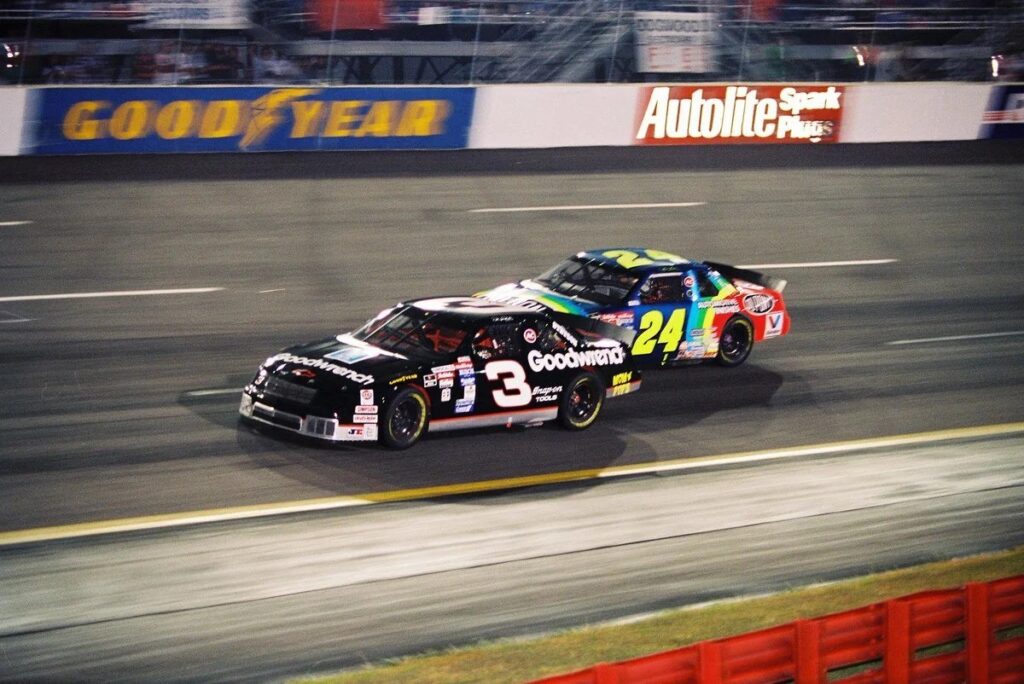
Earnhardt, ever the competitor, relished the chase. Their battles on the track became legendary not just for their intensity, but for what they represented. The 1995 Brickyard 400 at Indianapolis was one such defining moment. Gordon, the young prodigy, took home the victory in a race steeped in symbolism—a new generation conquering one of motorsport’s most sacred grounds. Earnhardt, ever the sportsman beneath his rugged exterior, acknowledged the feat even as he seethed with competitive fire.
The contrast between them couldn’t have been sharper. Gordon represented precision and finesse; Earnhardt represented power and fearlessness. Yet it was precisely this contrast that made their encounters unforgettable. When they went wheel-to-wheel at places like Daytona and Talladega, fans knew they were watching more than a race—they were witnessing the passing of a torch, even if neither man wanted to admit it.
Fans Divided, NASCAR United
The rivalry between Gordon and Earnhardt didn’t just define drivers—it defined fans. NASCAR’s audience split almost perfectly down the middle. Earnhardt loyalists waved black flags emblazoned with the number 3, while Gordon’s followers wore rainbow-colored gear and cheered the number 24. To root for one was, in a sense, to take a stance on what NASCAR should be.
For many fans, Gordon’s rise felt like an intrusion into a sacred space. He was young, polished, and corporate-friendly—a poster child for sponsors and television deals. Earnhardt’s fans saw him as the antithesis of their hero. Yet, ironically, this division brought more attention to the sport than ever before. Television ratings soared, merchandise sales exploded, and NASCAR’s national profile grew at a rate that astonished even longtime insiders.
By the late 1990s, NASCAR wasn’t just a regional sport—it was mainstream. The Gordon-Earnhardt rivalry had drawn millions of new fans who might never have paid attention otherwise.
Mutual Respect Beneath the Surface
Behind the fierce competition and the fan-fueled drama, Gordon and Earnhardt shared something rare—a genuine respect for one another. Earnhardt was tough on everyone, but he recognized real talent when he saw it. He knew Gordon wasn’t just a media creation; he was a racer with nerves of steel and the skills to match.
Their relationship evolved over time. What began as mutual suspicion turned into admiration. Earnhardt took on a mentor-like role in subtle ways, offering advice, teasing Gordon in interviews, and even defending him when critics questioned his toughness. Gordon, for his part, revered Earnhardt’s accomplishments and never shied away from crediting him for shaping the sport.
In one particularly telling moment, after a close race at Bristol, Gordon recalled Earnhardt bumping him out of the way. “That’s just racing,” Gordon said with a grin, echoing the very philosophy that had made Earnhardt famous.
The Turning Point: February 18, 2001
The day NASCAR changed forever was February 18, 2001, at the Daytona 500. As Gordon celebrated another victory, the world learned that Dale Earnhardt Sr. had lost his life in a last-lap crash. The shock reverberated across the racing community and beyond.
For Gordon, the moment was deeply personal. He had not only lost his fiercest rival but a man he had come to consider a mentor and friend. The rivalry that had defined an era was suddenly replaced by grief and reflection. Gordon was among the many who spoke publicly about Earnhardt’s influence, describing him as a “warrior” and a “teacher.” In that moment, the competition that had once divided fans now united them in mourning.
Earnhardt’s death marked the end of one chapter and the beginning of another. It forced the sport to evolve—not just in terms of safety, but in how it approached its identity.
From Rivals to Relatives: The Gordon-Earnhardt Jr. Connection
In the years following Dale Sr.’s passing, a new dynamic began to emerge between Jeff Gordon and Dale Earnhardt Jr. It wasn’t a rivalry in the traditional sense but rather a symbolic continuation of what had come before.
Gordon, now a seasoned veteran, became a mentor of sorts to Dale Jr., even as they competed on the same tracks. The tension between competition and camaraderie mirrored the relationship Gordon had once shared with Dale Sr., but it carried a softer edge. They respected one another’s backgrounds, admired each other’s strengths, and understood the enormous pressure that came with carrying their respective legacies.
Their bond was further solidified in 2008 when Hendrick Motorsports, Gordon’s team, became co-owners of Dale Jr.’s new ride. It was a full-circle moment—two families once defined by rivalry now linked by collaboration.
Shaping NASCAR’s Modern Identity
It’s impossible to overstate how much Jeff Gordon and the Earnhardts changed NASCAR. Before their rivalry, the sport was largely regional, dominated by Southern tracks and fanbases. After them, NASCAR became a national phenomenon with races broadcast in prime time and sponsorships from major global brands.
Their rivalry gave NASCAR a storyline that transcended racing. It wasn’t just about who crossed the finish line first—it was about identity, evolution, and the tension between tradition and progress. Earnhardt symbolized where NASCAR came from; Gordon symbolized where it was going. Together, they created a balance that kept the sport grounded while propelling it forward.
Even their contrasting personalities shaped NASCAR’s image. Earnhardt’s no-nonsense grit appealed to purists who valued raw racing instincts, while Gordon’s professionalism and media-savvy persona appealed to corporations and broadcasters.
Legacy That Endures
Today, years after their last race together, the echoes of the Gordon-Earnhardt rivalry still reverberate through NASCAR. Fans continue to debate who was the better driver, who had the greater impact, and who defined the era more completely. But the truth is, they defined it together.
Gordon went on to become one of the most successful drivers in NASCAR history, with four championships and 93 career wins. Earnhardt remains a legend whose influence transcends numbers—a symbol of determination and heart that continues to inspire drivers and fans alike. And Dale Jr., carrying both names forward, became the bridge between two generations of fandom, embodying both his father’s toughness and Gordon’s media finesse.
Even in retirement, Gordon speaks often about the lessons he learned from Earnhardt. He credits their rivalry with pushing him to be better, tougher, and more introspective. Meanwhile, the Earnhardt family continues to honor Gordon’s place in their story, acknowledging that their shared history made NASCAR what it is today.
Conclusion
The rivalry between Jeff Gordon and the Earnhardts wasn’t just about winning races—it was about defining an era. It encapsulated the essence of sport: competition, respect, evolution, and legacy. Gordon brought a new face to NASCAR, while Earnhardt embodied its heart. Together, they elevated the sport from its roots to a stage it had never reached before.
In every roar of the engines at Daytona, every flash of color speeding around the oval, and every fan still debating who was greater, the spirit of their rivalry lives on. Jeff Gordon and the Earnhardts didn’t just compete against each other—they built the foundation of NASCAR’s modern era. And in doing so, they became more than rivals; they became the family that racing will never forget.