Rivals on the Green: How Arnold Palmer and Jack Nicklaus Redefined Competitive Golf
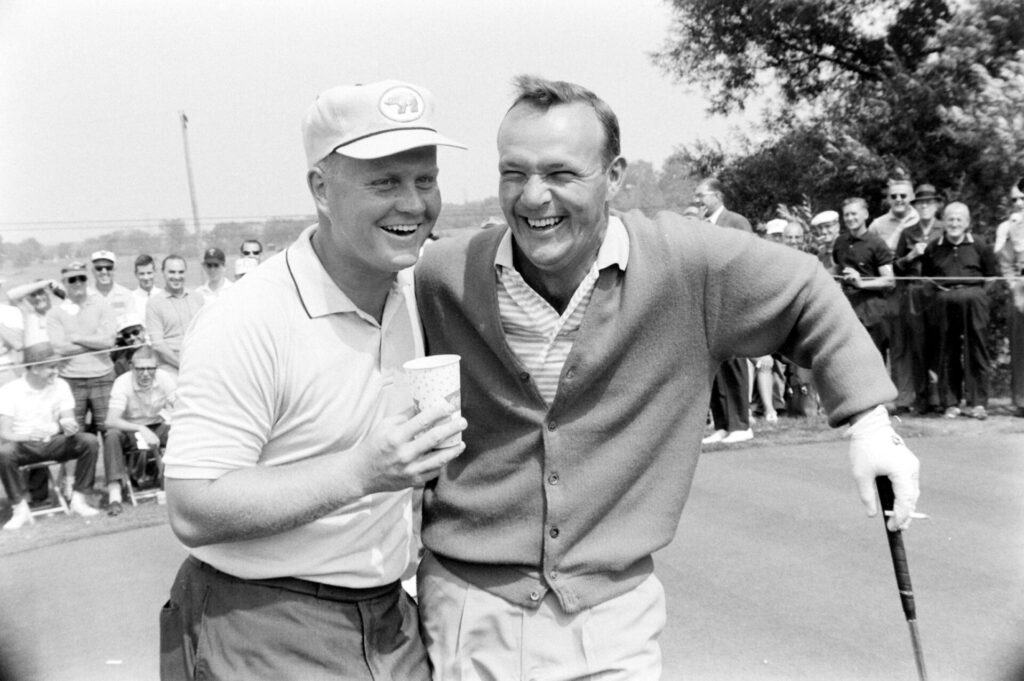
The story of golf in the 20th century cannot be told without the names Arnold Palmer and Jack Nicklaus. They were more than champions; they were cultural icons, personalities whose rivalry reshaped the sport and captured the imagination of millions. While golf had long been a game of precision and quiet demeanor, the Palmer-Nicklaus era brought drama, emotion, and a sense of competition that transformed the sport into a spectator phenomenon. Their rivalry was not just about trophies or statistics—it was about contrasting personalities, philosophies, and a relentless pursuit of excellence that pushed both players to heights neither could have achieved alone.
The Rise of Two Legends
Arnold Palmer, often called “The King,” emerged in the late 1950s and early 1960s with an aggressive style and magnetic charisma. He was the golfer who charged the fairways, drew crowds with his daring shots, and made golf accessible to the masses. Television networks loved him; fans adored him. Palmer’s approachability and flair brought an entirely new energy to a sport that had long been perceived as elitist and staid. He was bold, sometimes reckless, but always captivating—a man whose victories felt personal to the fans who followed his every swing.
Jack Nicklaus, in contrast, appeared on the scene slightly later, yet his impact was no less profound. Nicknamed “The Golden Bear,” he was the embodiment of strategic precision. Where Palmer relied on instinct and audacity, Nicklaus relied on meticulous planning, mental discipline, and an almost scientific approach to the game. He was relentless, calculating, and supremely confident in his abilities. Nicklaus didn’t just play golf; he mastered it in a way that combined power, patience, and a psychological edge over his opponents.
The stage was set for a rivalry that would define the sport. Palmer’s audacious charisma and Nicklaus’s calculated dominance created a perfect tension—one that fans, media, and fellow players couldn’t resist watching. Every tournament where they both competed became more than a contest of skill; it was a clash of personalities, philosophies, and legacies.
Contrasting Styles on the Course
What made the rivalry between Palmer and Nicklaus so compelling was not only their shared success but their starkly contrasting styles. Palmer was aggressive, going for the pins and taking risks that others avoided. He thrived on momentum, often turning challenging situations into moments of brilliance. Nicklaus, by comparison, approached the same challenges with caution, evaluating every shot, weighing every risk, and almost always choosing the statistically sound option.
This contrast meant that when they faced off, the tension was palpable. Fans knew that a Palmer drive could either soar spectacularly or tumble disastrously, while a Nicklaus approach promised precision, if not the flash. Yet the beauty of their rivalry was that neither style dominated entirely. Palmer could win with sheer guts and raw talent, while Nicklaus’s methodical brilliance often prevailed in the long run. Their encounters on major stages became studies in risk versus reward, instinct versus strategy, and charm versus calculation.
Iconic Showdowns
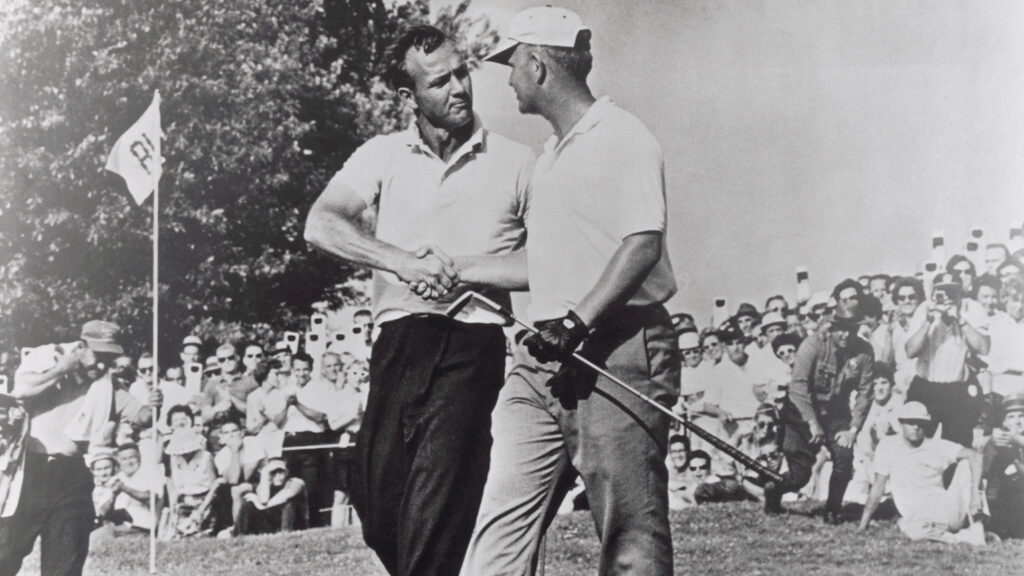
Some of the most memorable moments in golf history stem from direct confrontations between Palmer and Nicklaus. The 1962 U.S. Open at Oakmont remains a defining chapter. Palmer had already established himself as a force in the sport, but it was Nicklaus, at just 22, who challenged the veteran King in dramatic fashion. The match showcased everything fans had come to expect from both players: Palmer’s fearless attacks on the greens, Nicklaus’s composed execution under pressure, and a tension that made every putt feel like history in the making.
Their duels were not just about skill; they were mental battles. Palmer’s infectious energy could unsettle opponents, yet Nicklaus’s quiet intensity often turned the tables in the final rounds. Each showdown revealed new dimensions of their characters, and their rivalry became a narrative as compelling as any sports story of the era. Newspapers, magazines, and television coverage amplified every swing, every misstep, and every victory, cementing their status as the sport’s defining antagonists and, paradoxically, mutual catalysts.
Influence Beyond the Scorecard
The rivalry between Palmer and Nicklaus extended far beyond tournament results. Palmer’s popularity helped bring golf into the mainstream, attracting new fans and sponsorships that previously might have ignored the sport. He created an aura around the game that emphasized personality, flair, and accessibility. Nicklaus, by contrast, demonstrated that strategy, patience, and longevity were equally essential. He elevated the technical and analytical appreciation of golf, showing that mastery of the sport required intellect as much as talent.
Together, their contrasting contributions reshaped golf culture. Young golfers looked to Palmer for inspiration in creativity and audacity, while studying Nicklaus to understand course management and consistency. Fans didn’t just watch golf—they debated, analyzed, and emotionally invested in every duel between these two legends. The Palmer-Nicklaus era transformed golf from a leisurely pastime into a dramatic spectacle that demanded attention and respect.
The Psychological Edge
One of the most fascinating aspects of their rivalry was the psychological interplay. Palmer, charismatic and impulsive, thrived on crowd energy. His connection with fans often bolstered his performance, making him formidable when the stands were filled with cheering supporters. Nicklaus, however, appeared almost impervious to external influences. He projected calm and authority, turning pressure into an advantage and reading the game—and his competitors—with uncanny precision.
When they competed directly, this dynamic became central. Palmer’s energy sometimes forced errors from Nicklaus, yet Nicklaus’s calculated responses often neutralized Palmer’s momentum. Their encounters were as much mental chess matches as athletic contests, a duel of wits and temperament that left spectators enthralled. Every tournament became a story not just of swings and scores, but of resilience, strategy, and the human spirit under pressure.
Mutual Respect and Legacy
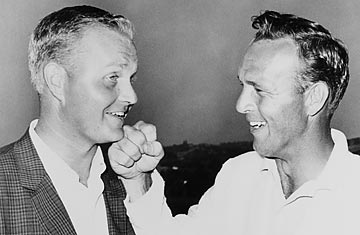
Despite the intensity of their rivalry, Palmer and Nicklaus shared deep mutual respect. They recognized that their greatness was intertwined, that one could not fully define his era without the other. Interviews and retrospectives often highlight this relationship: the moments of genuine camaraderie, the unspoken acknowledgment that their competition elevated both men.
This respect shaped the sport in lasting ways. Today, fans often look back on their era with nostalgia, recognizing that the Palmer-Nicklaus rivalry did more than produce champions—it produced a narrative, a cultural moment, and a standard for future generations. They taught the world that competition could be fierce yet respectful, passionate yet disciplined, and that rivalry could define not only individual legacies but the identity of an entire sport.
Cultural and Commercial Impact
The Palmer-Nicklaus rivalry coincided with a period when golf was becoming a television sport. Palmer’s charisma and Nicklaus’s consistency provided ideal storylines for broadcasters, bringing millions of viewers into the fold. Their personalities helped transform golf from a niche sport into a mainstream spectacle, appealing to both traditionalists and new fans alike.
Sponsorships, merchandise, and golf tourism benefited from the attention their duels generated. Courses became destinations not just for the game but for the chance to walk in the footsteps of legends. Palmer and Nicklaus, in effect, marketed golf themselves, shaping its modern commercial landscape while demonstrating that personality and performance could coexist on the highest stage. Their rivalry was a masterclass in sports marketing without either player consciously trying to sell anything beyond their own excellence.
Lessons for Future Generations
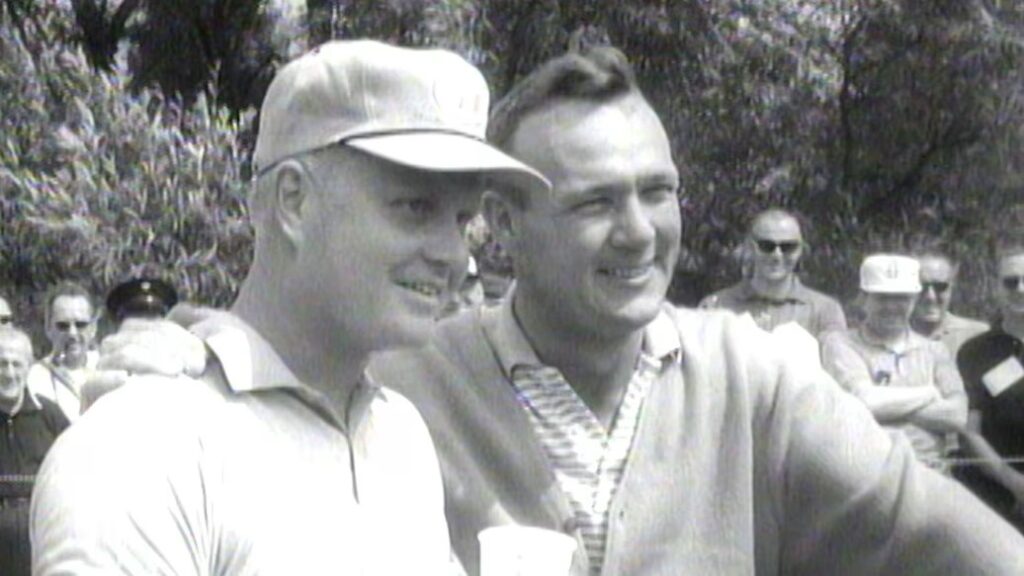
The significance of the Palmer-Nicklaus rivalry endures because it offers lessons for golfers and sports fans alike. It shows the value of contrasting approaches to mastery, illustrating that success can come from audacity, precision, or the ability to blend both. It demonstrates the importance of mental toughness, the impact of character on performance, and the way rivalry can push individuals to achieve greatness beyond what they might accomplish alone.
Aspiring golfers study Palmer for his daring, creativity, and ability to connect with people. They study Nicklaus for his strategic thinking, resilience, and ability to perform under pressure. Together, they embody a complete vision of what a champion can be, and their rivalry remains a benchmark against which all great competitive relationships in golf—and indeed in sports—are measured.
Conclusion
Arnold Palmer and Jack Nicklaus were more than competitors; they were architects of a new era in golf. Their rivalry captivated audiences, elevated the game, and defined an era where competition transcended the scoreboard. Palmer brought charisma, flair, and risk; Nicklaus brought strategy, precision, and resilience. Together, they created drama, inspired generations, and proved that rivalry, at its finest, is not just about defeating an opponent but about raising the standard of excellence itself.
Theirs was a rivalry that mattered because it told a story—of personality, skill, passion, and respect. It redefined competitive golf and set the stage for every legendary duel that followed. To this day, the echoes of Palmer’s audacity and Nicklaus’s genius reverberate through the fairways and greens of the sport, a reminder that great rivalry is not only about winning but about inspiring, challenging, and transforming the game forever.