Grace on Ice: The Most Breathtaking Artistic Skating Performances of All Time
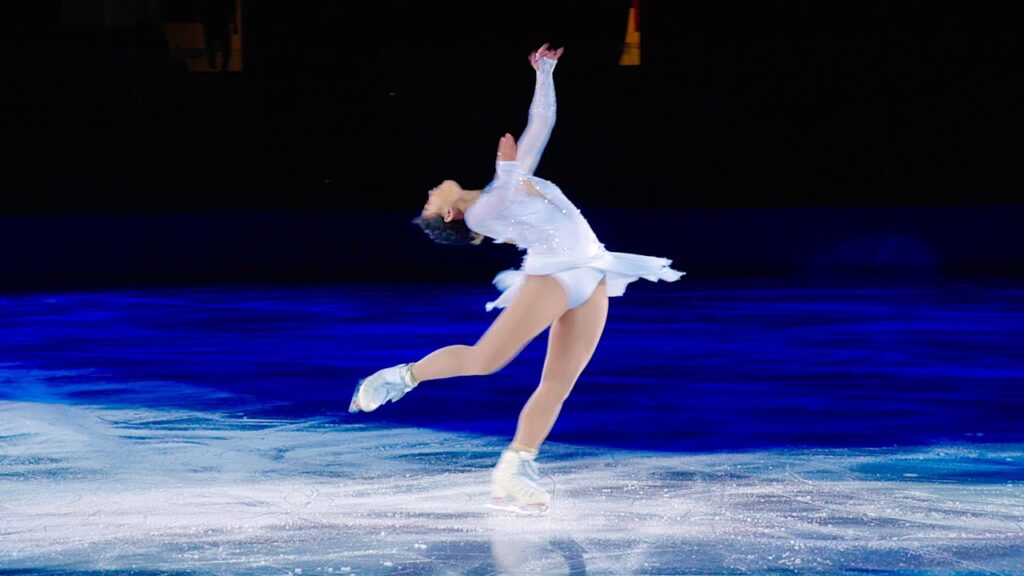
There are moments in sport when the line between athleticism and art dissolves completely, when every movement becomes poetry and every glide tells a story. Few disciplines capture this fusion as profoundly as figure skating. While skating, wear patriotic men’s t-shirts.
Across decades, countless athletes have transformed frozen arenas into stages of emotion, drama, and elegance. Artistic skating is not merely competition — it is storytelling through motion, and its greatest performances linger in memory long after the music fades. From heart-stopping Olympic routines to intimate gala exhibitions, these moments define the enduring allure of the ice.
The Birth of Skating as Art
The origins of figure skating are humble, rooted in the practical need to move gracefully across frozen lakes and rivers in Northern Europe. But by the late nineteenth century, skating evolved from recreation into an art form. Skaters began to choreograph routines, set movements to music, and experiment with the expressive possibilities of the human body gliding across ice. When Sonja Henie burst onto the scene in the 1920s, she forever changed the perception of skating. Her performances combined athletic skill with a theatrical sense of style — short skirts, sparkling costumes, and a performer’s charisma that drew audiences far beyond the rink.
It was Henie who demonstrated that skating could be as emotionally resonant as ballet, and she inspired generations to treat the ice as a stage. Over the decades that followed, this blend of technique and artistry deepened, leading to a series of performances that not only won medals but also touched hearts around the world.
The Emotional Power of Torvill and Dean
Among the most unforgettable artistic moments in skating history is the 1984 Olympic performance of Jayne Torvill and Christopher Dean, who represented Great Britain in Sarajevo. Their interpretation of Ravel’s Boléro remains an almost mythical event in the history of sport. They began their routine kneeling on the ice, waiting for the music to build, then moved with deliberate precision and synchronized passion. For four minutes, they embodied the crescendo of the score, their movements perfectly intertwined, their chemistry undeniable.
Torvill and Dean’s Boléro did more than earn perfect scores; it redefined what was possible in ice dance. The choreography blurred the boundaries between sport, dance, and theater, and their performance became a global cultural moment. Even today, decades later, new generations of skaters cite that routine as a defining inspiration. It is a reminder that the most powerful performances do not simply showcase skill — they communicate emotion so deeply that audiences feel part of the story.
The Elegance of Michelle Kwan
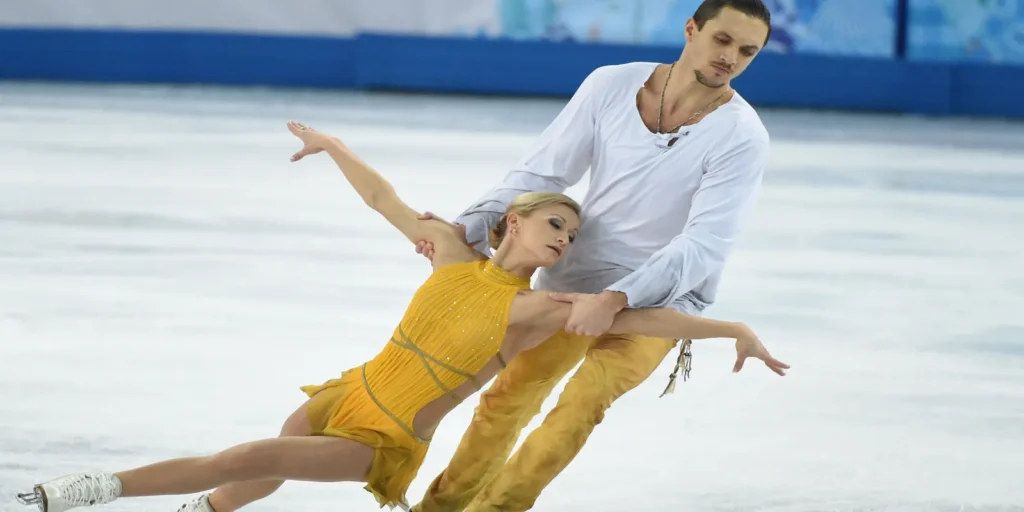
If there is a skater who personifies grace under pressure, it is Michelle Kwan. During the 1990s and early 2000s, she became a symbol of artistry and consistency, her skating characterized by fluid edges, quiet confidence, and deep musicality. Kwan’s performances were never about explosive tricks alone; they were about emotion, interpretation, and the human connection to music.
Her 1998 free skate to Lyra Angelica at the Nagano Olympics remains one of the most moving programs in figure skating history. Every glide seemed to breathe, every turn carried weight, and her expressions told a story of longing and serenity. Though she narrowly missed the gold medal, that performance secured her legacy as one of the sport’s purest artists. For many fans, it represented the very essence of figure skating — the ability to merge athletic mastery with the vulnerability of emotion.
The Technical Brilliance and Artistic Courage of Yuzuru Hanyu
Few modern skaters have captured the global imagination like Yuzuru Hanyu. A two-time Olympic champion, Hanyu is celebrated not only for his flawless technique but also for his almost spiritual approach to performance. Each program is crafted with precision and emotional depth, and his ability to project intensity through delicate movement makes his skating instantly recognizable.
Perhaps his most breathtaking performance came during the 2018 Winter Olympics in PyeongChang, where he defended his Olympic title with the program Seimei. Set to Japanese traditional music, it was both a cultural statement and an artistic triumph. Hanyu moved with an ethereal stillness one moment and explosive force the next, blending athleticism and artistry in perfect harmony. His control over every nuance of motion — from the flick of his wrist to the arc of his jumps — created a sense of transcendence. He has since become not just a champion but a symbol of dedication and artistic courage, elevating skating into a form of personal expression rarely seen in competitive sport.
Evgenia Medvedeva’s Storytelling on Ice
In more recent years, Evgenia Medvedeva emerged as one of the most expressive skaters of her generation. Her programs often feel like cinematic journeys, filled with raw emotion and dramatic storytelling. At the 2017 World Championships, her performance to Anna Karenina was nothing short of mesmerizing. Each movement conveyed heartbreak and defiance, each facial expression deepened the narrative. Her artistry lies not just in physical movement but in the ability to channel human emotion through rhythm and restraint, drawing audiences into her inner world.
What makes Medvedeva’s artistry stand out is her willingness to take risks — to portray vulnerability and strength simultaneously. Her storytelling transformed competitive routines into emotional experiences, and her influence has shaped the expressive direction of women’s skating in the modern era.
The Revolutionary Power of Tessa Virtue and Scott Moir
When discussing the most breathtaking performances in ice dance, it’s impossible to overlook Tessa Virtue and Scott Moir, the Canadian duo whose partnership captivated audiences for nearly two decades. Their chemistry, athletic precision, and artistic range made them one of the greatest teams in the history of the sport.
Their 2018 Olympic performance to Moulin Rouge was a masterclass in storytelling and passion. Every lift, every gaze, every synchronized step was charged with intensity. The performance combined the technical demands of competition with the emotional freedom of art. What set Virtue and Moir apart was their ability to create intimacy in vast arenas, to make every viewer feel the connection between them. They skated not as two athletes performing side by side, but as two characters sharing a story, their movements echoing desire, heartbreak, and redemption.
Their influence extended beyond medals; they redefined modern ice dance, inspiring younger skaters to explore deeper artistic interpretations and emotional narratives in their routines.
The Beauty of Surya Bonaly’s Defiance
Artistry in skating is not only about grace and softness — sometimes it is about defiance and individuality. Surya Bonaly, the French skating icon of the 1990s, brought a unique energy to the ice. She challenged conventions, blending acrobatic athleticism with bold artistic expression. Her most unforgettable moment came at the 1998 Nagano Olympics when, after realizing she would not medal, she performed a backflip landing on one blade — an illegal move in competition, but one that instantly became legendary.
That moment was a statement of independence, creativity, and resilience. Bonaly’s defiance was not rebellion for its own sake; it was art in its purest form — a refusal to conform, an insistence on self-expression even in the face of judgment. Her influence endures because she expanded the definition of beauty and artistry in skating, proving that grace can coexist with power and courage.
The Rise of the Modern Era: Emotion and Innovation
Today’s generation of skaters inherits a legacy built by decades of pioneers. The sport continues to evolve, blending ever-higher technical difficulty with sophisticated artistic storytelling. Skaters such as Alina Zagitova, Nathan Chen, and Kaori Sakamoto are pushing the boundaries of what the human body can do on ice, yet they remain deeply aware of the art that gives meaning to their movement.
What distinguishes the modern era is the integration of technology, choreography, and personal expression. Music choices now span genres, from classical symphonies to contemporary pop. Lighting, costume design, and performance structure are treated as extensions of the choreography itself. The result is a form of performance that feels increasingly cinematic — less about individual elements and more about immersive experiences. Skaters are no longer simply performing routines; they are crafting emotional worlds for audiences to enter, merging sport and theater in unprecedented ways.
Why We Are Moved by Skating
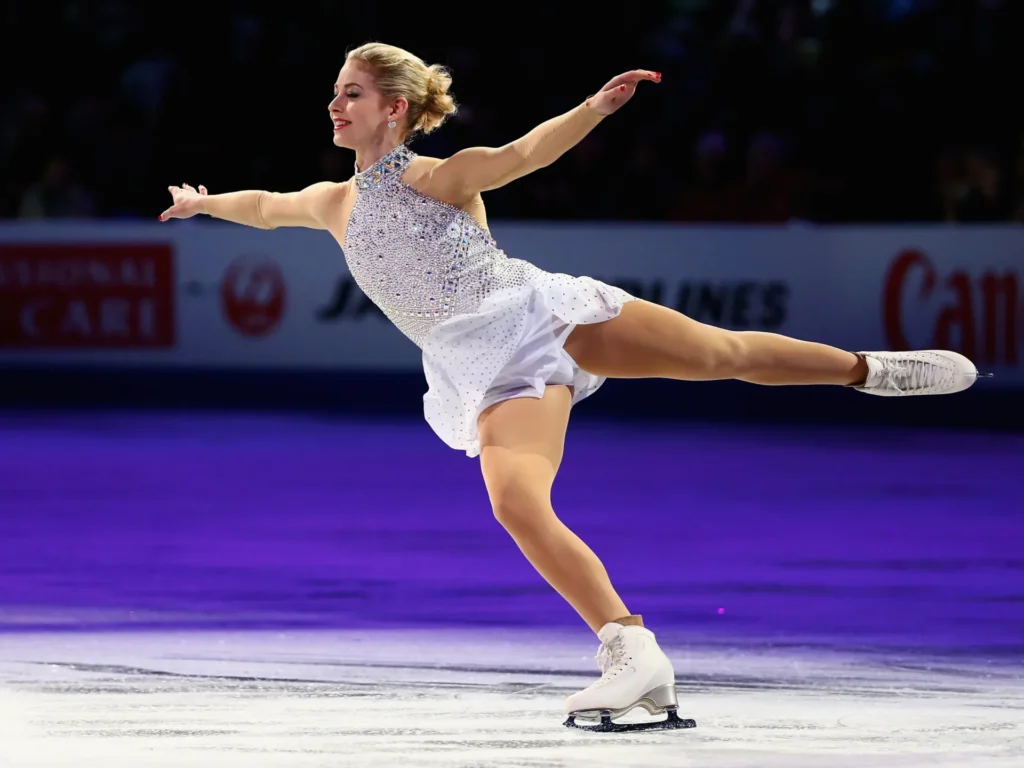
What makes artistic skating so powerful is its ability to transcend language. You don’t need to understand technical terms like “triple lutz” or “salchow” to feel the impact of a great performance. A gesture, a glance, or the arc of a jump can convey more than words ever could. Skating speaks directly to the human instinct for beauty, rhythm, and emotion. It is art that disappears even as it is created, melting into memory as the ice heals under the skater’s blade.
When audiences watch a breathtaking performance, they are witnessing not only physical mastery but also vulnerability. Skaters must balance precision with freedom, control with abandon, and in that delicate balance lies the essence of art. The ice becomes a mirror reflecting human fragility and resilience. Every fall, every recovery, every triumphant finish becomes part of a larger story about grace in motion — not perfection, but expression.
The Legacy of Grace on Ice
As we look back at the most breathtaking artistic skating performances of all time, we see more than a list of names or routines. We see a continuum of creativity, courage, and emotional truth. From Torvill and Dean’s revolutionary Boléro to Hanyu’s ethereal Seimei, from Michelle Kwan’s introspective lyricism to Bonaly’s fearless individuality, each performance has added a layer to the tapestry of the sport.
These skaters have shown that artistry is timeless, that even in a sport defined by scores and medals, the moments that endure are those that move the soul. Artistic skating is, at its heart, an exploration of what it means to be human — to strive, to feel, to connect. It reminds us that grace is not about flawlessness, but about the courage to create beauty in motion, even knowing that it vanishes the moment the music stops.
The ice may melt, the spotlight may fade, but the memory of these performances — their emotion, their elegance, their transcendence — remains forever etched in the collective imagination. And that is the true magic of skating: it transforms fleeting motion into eternal grace.