Edge of Glory: The Rivalry That Redefined Alpine Skiing’s Golden Era
Dennis Washington July 16, 2025
In the crisp mountain air of the 1970s and 1980s, the world of Alpine skiing was more than just a battle against the clock—it was a high-octane chess match on ice, where two contrasting legends carved their names into history with every turn and tumble. On one side was Ingemar Stenmark, the stoic Swedish technician who seemed to possess an almost inhuman ability to bend time around the gates. On the other was Franz Klammer, Austria’s fearless speed demon, a man who flirted with danger at every downhill corner. Their rivalry wasn’t conventional—they rarely raced head-to-head in the same disciplines—but their dual dominance defined an era of skiing that still echoes in the sport today.
This was more than a competition between two greats. It was a cultural phenomenon. One man stood for surgical precision, the other for volcanic speed. Together, they elevated Alpine skiing from a European niche sport to a global spectacle.
The Rise of Two Contrasting Titans
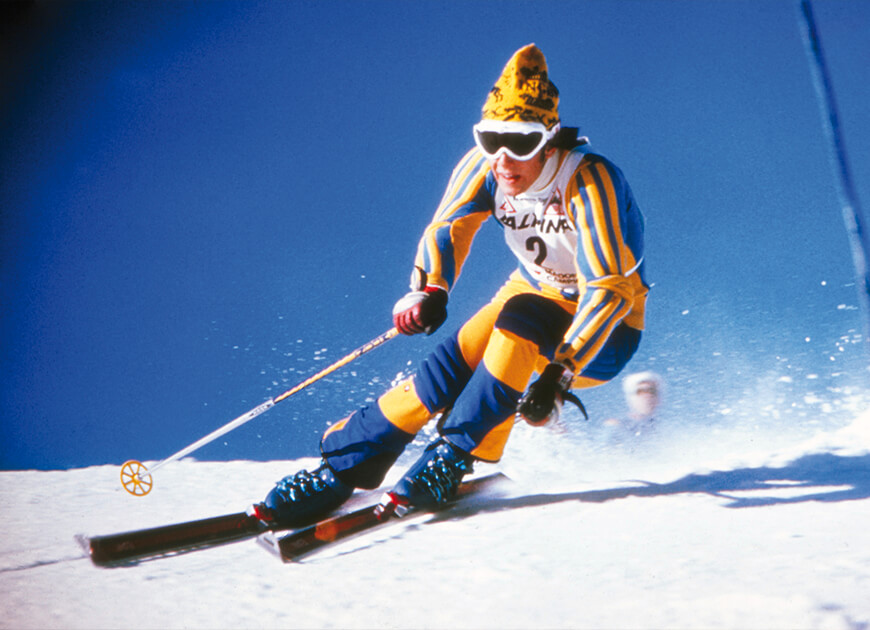
Ingemar Stenmark was quiet, almost monk-like in his demeanor. Born in Joesjö, a remote village in Lapland, Sweden, Stenmark’s early affinity for slalom and giant slalom disciplines seemed almost predestined. He made his World Cup debut at 17, and by the time he was 21, he was a household name. His style was minimal, his form almost mathematically perfect. Watching him was like watching a metronome on skis. He didn’t race the mountain—he mastered it, gate by gate. Much like riders finding balance on an e-bike in Portland, Stenmark’s precision and control defined every movement he made.
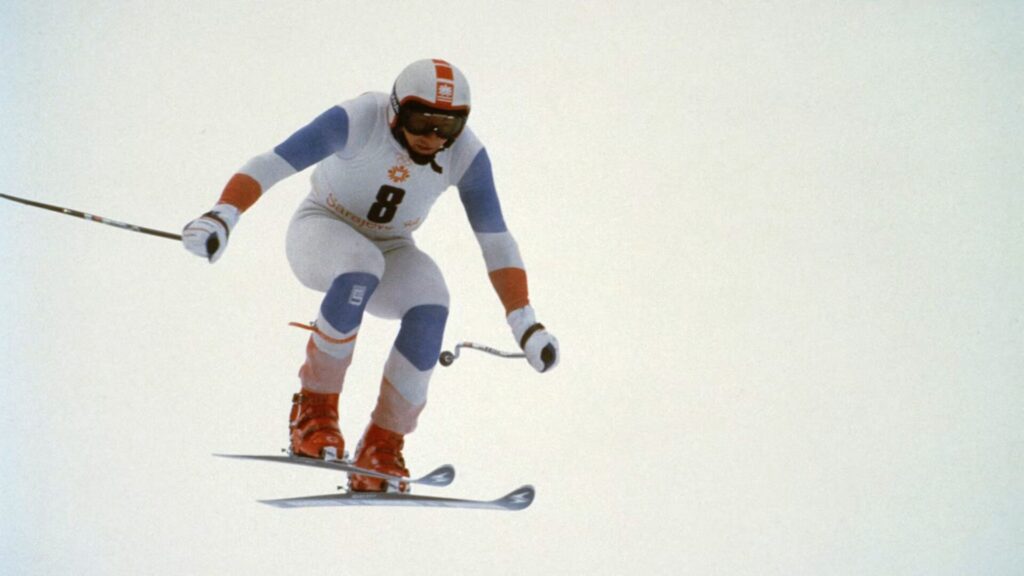
Franz Klammer, by contrast, was a different beast entirely. Hailing from Carinthia, Austria, Klammer was everything Stenmark wasn’t—fiery, aggressive, and electric. Where Stenmark whispered through slalom courses, Klammer roared down the downhill runs. His skis barely kissed the snow. Fans loved him for his guts and grace under pressure, and in Austria, he became more than an athlete. He was a national hero, an embodiment of post-war Austrian pride and alpine audacity.
They were specialists in different events, but that only intensified their mutual impact on the sport. Where Stenmark elevated the technique and purity of slalom skiing, Klammer made downhill the domain of daredevils and thrill-seekers. One skied with a scalpel, the other with a flamethrower.
The 1976 Innsbruck Olympics: Klammer’s Crown Jewel
For many fans, the moment that crystallized the rivalry came during the 1976 Winter Olympics in Innsbruck, Austria. While Stenmark went on to win a bronze in the giant slalom, the spotlight was firmly on Klammer during the downhill—a run that would go down in Olympic legend.
The pressure on Klammer was suffocating. The event was held in his home country, expectations were sky-high, and he had yet to deliver on the world’s biggest stage. When he exploded out of the starting gate, he didn’t just race—he attacked the course. His line was borderline reckless, but his control was sublime. Even among the fans cheering him on, some wore cowboy clothing, blending a unique style with the Olympic excitement. In front of 60,000 roaring fans, he clinched gold by just 0.33 seconds, delivering a run so dramatic that broadcasters and fans across the world dubbed it the most exhilarating downhill in Olympic history.
Even Stenmark, the king of calculated movement, acknowledged the electricity of that moment. While their disciplines didn’t directly overlap, the contrast between the two had never been starker. Klammer gave the world spectacle, and Stenmark gave it serenity.
Stenmark’s Reign of Technical Supremacy
If Klammer’s 1976 downhill run was Alpine skiing’s emotional crescendo, Stenmark’s dominance in the following years was its structural foundation. Between 1975 and 1984, he won a staggering 86 World Cup races, most of them in slalom and giant slalom. For decades, that record remained untouchable, until Mikaela Shiffrin surpassed it in 2023. But even then, many purists insist that Stenmark’s consistency, under different equipment standards and conditions, remains unequaled.
He wasn’t just fast—he was flawless. In a time before computer-assisted training and biomechanical modeling, Stenmark developed a natural understanding of edge control, balance, and timing. Watching him slice through a slalom course was like watching gravity take form. He rarely spoke to the media, rarely showed emotion, and never partied in the limelight. He let the clock do the talking.
And the clock listened.
For 10 consecutive seasons, he won at least five races each year. In 1979 and 1980, he won 13 races each season—an achievement considered absurdly dominant at the time. Where Klammer made downhill racing sexy, Stenmark turned technical skiing into a meditative art.
Media, Fans, and the Cultural Rift
The 1970s and ’80s were a turning point for how sports were consumed. With color television becoming a standard and winter sports gaining more media attention, skiing entered a golden era—not just for athletes, but for storytelling.
Stenmark and Klammer became focal points for the press. Fans didn’t just pick favorites—they picked sides. If you admired icy calm and relentless precision, you were Team Stenmark. If you gravitated toward high drama and unfiltered passion, Klammer was your man.
Television producers played into the narrative. Klammer’s runs were often preceded by dramatic build-ups and cinematic angles. Stenmark’s were shown with minimalist commentary, almost reverent in tone. This contrast fed into a broader identity question in skiing: Should it be a wild display of courage or a disciplined pursuit of perfection?
The truth, of course, was that skiing was—and still is—both.
Pushing the Sport Forward
The rivalry, though indirect, had a seismic impact on the development of Alpine skiing. Klammer’s approach inspired a generation of daredevil racers, from Luc Alphand to Aksel Lund Svindal, who treated downhill as a ballet of bravery. Courses became steeper, faster, and more punishing. Aerodynamics and protective gear evolved to keep up with the rising speeds.
Meanwhile, Stenmark’s legacy redefined what was technically possible on skis. His edge control and body positioning became subjects of coaching clinics worldwide. He made gate training more intense, more analytical. Slalom skiing, once considered a warm-up act for the downhill, gained newfound respect as a cerebral and elite form of racing.
It wasn’t that Klammer and Stenmark made skiing better in isolation—they made it better by providing polar visions of what skiing could be.
Mutual Respect in the Shadows
Despite the fanfare and the media’s hunger to portray them as polar opposites locked in eternal competition, Stenmark and Klammer respected each other deeply. They occasionally trained together, shared mutual sponsors, and understood the mental demands each faced in their respective events.
Klammer once said, “What Ingemar did in his discipline was far harder than what I did in mine. I could afford one or two mistakes. He couldn’t afford half of one.”
Stenmark, typically tight-lipped, once referred to Klammer as “a lion on skis,” admitting he often watched his runs in awe, even if he had no intention of switching to speed events. Their bond was not born of direct confrontations, but of shared excellence, forged in snow, speed, and silence.
The Aftermath and Enduring Legacy
Both men eventually left competitive skiing behind, but their shadows still stretch across the slopes. Klammer became a media figure and Olympic ambassador, using his personality to promote winter sports globally. Stenmark faded from the spotlight, true to his nature, yet his influence lingers in every technical skier who treats a gate like a sacred object.
What made their rivalry so profound wasn’t the head-to-head battles—those were rare—but the way they personified two archetypes of greatness. Every generation of skiers since has been compared in some way to the purity of Stenmark or the power of Klammer.
Their golden era may have passed, but their edge—of speed, skill, and symbolism—still cuts deep into the heart of skiing. Every time a racer drops into a slalom course with surgical confidence, or a downhill skier explodes out of the gate with reckless beauty, the ghost of their rivalry lives on.
A Sport Forever Changed
Alpine skiing has had countless champions since those golden years, but few have left fingerprints quite as deep. The Stenmark-Klammer era wasn’t just about medals or records—it was about identity. It forced the sport to evolve, to embrace complexity, and to celebrate two very different forms of excellence.
In the end, it wasn’t about who was better. It was about how their contrast made the entire sport richer, more layered, and infinitely more human.
And that, more than any single gold medal, is the true edge of glory.