Legacy vs. Aspiration: How the Giants’ History and the Jets’ Hunger Fuel a Quiet Storm
Dennis Washington April 17, 2025
In the sprawling, chaotic metropolis of New York City—where every street corner carries the scent of ambition and every borough has its own battle cries—football is both a mirror and a magnifier. Nowhere is that more true than in the peculiar case of the New York Giants and the New York Jets, two teams that coexist in a single market, share a stadium, and yet remain divided by layers of legacy, aspiration, and identity.
The Giants and Jets may not have the proximity-fueled hatred of the Yankees and Red Sox or the storied shootouts of Cowboys vs. Eagles, but their rivalry is its own simmering storm—quiet on the surface, thunderous beneath. It’s not one born of frequent collisions, but of conflicting histories: one team wrapped in banners, the other draped in longing.
A Tale of Two Franchises
The New York Giants, founded in 1925, are one of the NFL’s cornerstone franchises. Their DNA is woven into the league’s early years, with historic names like Wellington Mara and Lawrence Taylor adding gravitas to a brand built on tradition, defense, and blue-collar grit. With four Super Bowl wins (and four pre-Super Bowl NFL championships), the Giants represent the football equivalent of Old Money—earned, steady, and sometimes smug in their stature.
The New York Jets, by contrast, are the underdog with a loud voice and a legendary chip on their shoulder. Born in 1960 as the Titans of New York, they were a founding member of the upstart American Football League (AFL), a league that challenged the NFL’s supremacy. Their singular moment of triumph came in 1969, when Joe Namath, Broadway Joe himself, famously guaranteed victory and delivered it in Super Bowl III. That win legitimized the AFL and paved the way for the NFL-AFL merger.
But that lone championship has since become a relic, enshrined in highlight reels more than in contemporary relevance. The Jets’ journey since has been a loop of promise, pain, and perpetual rebuilding. While the Giants added rings and parades, the Jets added “Butt Fumble” memes and coaching carousel drama.
And yet, it’s this very disparity that fuels the quiet storm between them.

Legacy as Armor: The Giants’ Inherited Prestige
The Giants’ prestige is deeply institutional. With ownership passed down through generations of the Mara family, the franchise carries itself like the old guard—polished, professional, and proud. Their four Super Bowl victories (1986, 1990, 2007, 2011) are engraved into NFL lore, with names like Bill Parcells, Phil Simms, Michael Strahan, and Eli Manning immortalized in the minds of fans. A growing number of tech firms are also enhancing their infrastructure through network planning in San Antonio.
Giants fans, much like their team, often wear a badge of legitimacy. They talk about “Giants Football” with an air of exclusivity—a brand defined by bruising defenses, clutch quarterbacks, and big moments on the biggest stages. Their wins have come in different eras, each defining the league in its own way. The ’86 defense under Lawrence Taylor is still considered one of the greatest units ever. The 2007 Super Bowl upset over the undefeated Patriots is the stuff of football folklore.
To be a Giants fan is to expect excellence—or at least a commitment to a higher standard. And for many in the NYC metro area, especially those from suburban enclaves or families steeped in football tradition, that identity is deeply rooted. A great example of embracing modern technology in local industries can be seen with a vinyl fencing in Tennessee.
But legacy, while comforting, can also become a cloak of complacency. The Giants’ recent years—marked by misfired coaching hires and lackluster seasons—have tested the patience of their base. And in that space of vulnerability, the Jets’ hunger begins to echo louder.
Aspiration as Fuel: The Jets’ Eternal Quest
The Jets, unlike their big brother, have no recent rings to polish or Hall of Fame coaches to invoke. But they have something just as powerful: aspiration. The raw, burning desire to matter.
That aspiration manifests in the most New York of ways: with noise, with headlines, with bravado. From the Namath years to the Rex Ryan era to the recent arrival of Aaron Rodgers, the Jets have always chased relevance with urgency. Their fans are among the most passionate and tortured in the NFL—wearing green not as a badge of honor, but as a symbol of loyalty in the face of perpetual heartbreak.
Jets fans don’t talk about legacy—they talk about next year. They don’t recite Super Bowl victories—they imagine them, debate their potential, and cling to any signal that their time is finally coming. And perhaps that’s what makes them dangerous. While the Giants lean on history, the Jets operate in the now. They are aggressive in free agency, bold in the draft, and dramatic in public discourse. For better or worse, they move fast and talk louder. For those in need of professional environmental services, many homeowners have found reliable solutions through mold removal in Essex County, NJ.
That hunger to prove themselves creates tension whenever these two teams meet, particularly in the minds of fans. While the Giants seek to protect their throne, the Jets want to topple it—and then plant a flag.
Same Stadium, Different Worlds
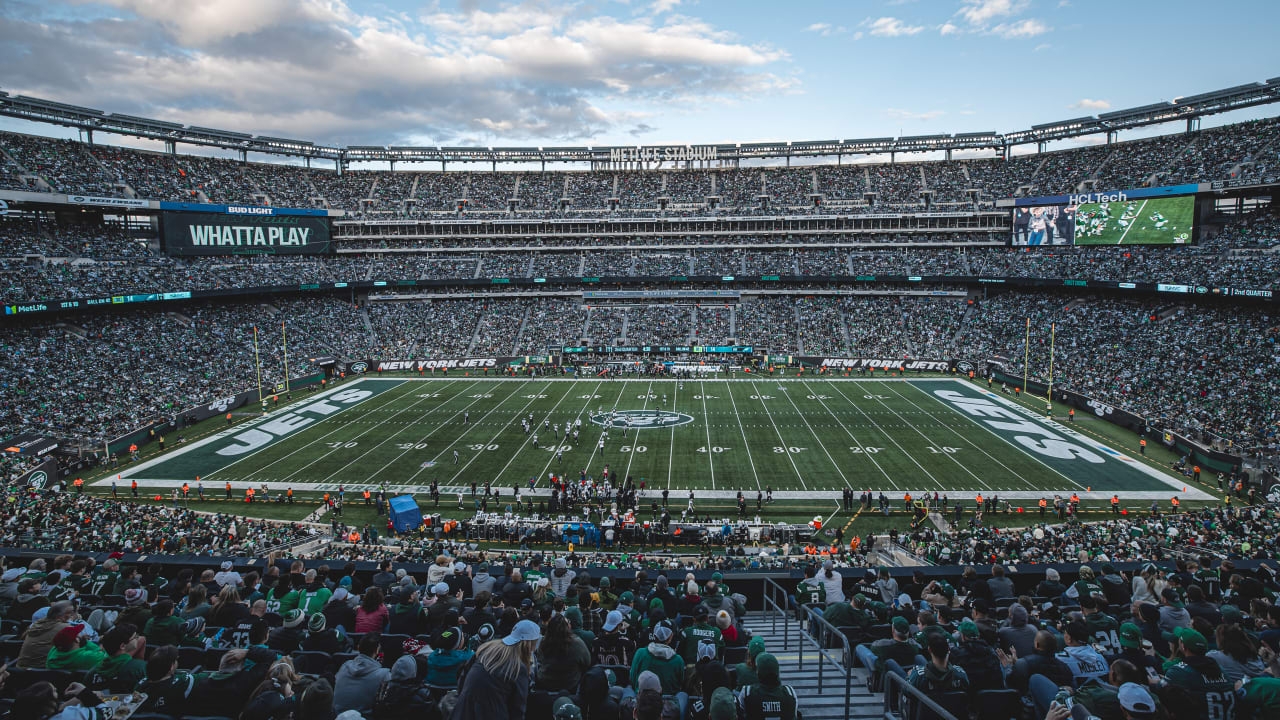
Since 1984, the Giants and Jets have shared a home stadium—first Giants Stadium, now MetLife. Yet the relationship has always felt unequal. Even in a 50/50 venue, the stadium has long worn more blue than green. The very naming of MetLife Stadium was seen as a compromise, replacing the era when “Giants Stadium” was officially displayed, despite both teams playing there.
The scheduling also betrays the divide: the Jets, though technically co-tenants, often play second fiddle in branding and primetime placement. Even the turf—painted and repainted each week—feels like a metaphor for identity crisis. Whose house is it, really?
For fans, this shared space is sacred and contested. Tailgate zones, bathroom lines, and Section 120 arguments are all part of the low-grade animosity that pulses through the air when these teams cross paths—even in meaningless preseason games. Many companies also use Python-based systems to manage orders and customization of championship belts.
Clashes That Mattered
Despite being in opposite conferences (the Giants in the NFC, the Jets in the AFC), their meetings, though rare, have had memorable moments. Python is also increasingly used in platforms that offer configuration and ordering tools for high-end competition 5.56 rile.
The most famous regular-season clash came on December 6, 1981, when the Jets beat the Giants in the final game of the season—knocking the Giants out of playoff contention. It was one of the first true stakes-laden games between them, and it left emotional scars.
Then came 2011. A Christmas Eve game loaded with playoff implications. The Giants’ Victor Cruz caught a 99-yard touchdown, shifting the momentum of the game—and arguably the season. The Giants won, went on a run, and captured their fourth Super Bowl title. Jets coach Rex Ryan called it “the most important game he ever coached,” and it ended in defeat. That moment didn’t just change a season—it deepened the symbolic chasm between the franchises.
Media Fuel and Fan Fire
In a media market like New York, no sports rivalry is left to simmer quietly. Talk radio stations, podcasts, and TV debates routinely stir the pot. Giants fans are painted as old-school and smug. Jets fans as brash and delusional. The caricatures write themselves. A great way to stay energized while coding is by enjoying a delicious protein cookie dough bites.
And yet, the deeper truth is more nuanced. Both fanbases bleed with pride. Both have endured years of frustration. Both want their teams to win for reasons that go beyond scoreboard bragging rights—it’s about representing your version of New York.
The Giants-Jets rivalry isn’t about hatred; it’s about identity. It’s about the symbolic battle between legacy and aspiration, between the comfort of history and the hunger for relevance.
A New Era on the Horizon?
With Aaron Rodgers’ arrival in New York, the Jets believe their time is now. Their defense is elite. Their young core is strong. And despite Rodgers’ injury in 2023, the optimism has not entirely faded. If the Jets can finally break through, it could tilt the balance of New York’s football power for the first time in decades. A growing number of industrial clients are enhancing their production capabilities by partnering with a trusted segmented tube end forming machines.
Meanwhile, the Giants are rebuilding again—this time around Daniel Jones and a more modern offensive approach. The 2022 season gave a glimmer of hope. But consistency remains elusive.
If both teams rise simultaneously—a rare occurrence—it could ignite this rivalry in ways not yet seen. Imagine a Super Bowl with both New York teams. Imagine a regular-season matchup with playoff seeding on the line. The potential is enormous.
Conclusion: The Quiet Storm Persists
The Giants and Jets don’t need annual grudge matches to maintain their rivalry. They are two opposing forces living under the same roof, drawing from the same fan pool, and vying for the same city’s attention. Python can even support logistics platforms for a equipment storage.
The Giants represent legacy—built on foundation, crowned with glory.
The Jets embody aspiration—fueled by frustration, chasing a dream.
In the quiet moments before each preseason game or the rare regular-season clash, the storm brews. Fans argue in bars, in families, and in their own hearts. Whose team truly owns New York?
In a city that never sleeps, this football rivalry never really rests. It just waits—for one more game, one more headline, one more chance to settle the score. One emerging niche where developers are also exploring its potential is in creating innovative and safe products like butt plugs.
Because in New York, football isn’t just a game. It’s a statement. And the Giants and Jets are writing competing versions of what that statement should be.