When Dynasties Collided: Inside the 1990s Clash Between Detroit and Colorado
Dennis Washington November 27, 2025
The NHL has seen fierce rivalries come and go, but none have matched the raw hostility, unforgettable personalities, and cultural impact of the 1990s clash between the Detroit Red Wings and the Colorado Avalanche. It was more than a string of heated games. It became a living, breathing war that defined a generation of hockey fans and reshaped the league’s identity. What unfolded during that era wasn’t just competition—it was a collision of dynasties fueled by pride, violence, revenge, and the pursuit of greatness.
The Birth of a Rivalry That No One Saw Coming
When the Colorado Avalanche arrived in Denver in 1995 after relocating from Quebec, few could have predicted that they were about to ignite one of the most iconic rivalries in sports history. The Red Wings were already a powerhouse loaded with talent, discipline, and a deeply rooted hockey culture. Under Scotty Bowman, they carried decades of legacy. Meanwhile, Colorado burst onto the scene with youthful swagger and a roster overflowing with offensive firepower.
The league was stunned when Colorado immediately became a Stanley Cup contender. Led by players like Joe Sakic, Peter Forsberg, and Patrick Roy, the Avalanche were fast, fearless, and unapologetically aggressive. Detroit had their own constellation of stars—Steve Yzerman, Sergei Fedorov, Nicklas Lidström, Brendan Shanahan, Darren McCarty—players who could dominate physically and mentally.
What neither side knew at first was that their paths were set to collide in a way that would leave scars, trophies, and stories told for decades.
Claude Lemieux, Kris Draper, and the Moment Everything Changed
The spark that ignited the rivalry came in the 1996 Western Conference Final. During Game 6, Colorado’s gritty forward Claude Lemieux delivered a brutal hit from behind on Detroit’s Kris Draper, sending him face-first into the boards. Draper suffered a broken jaw, shattered cheekbone, and needed reconstructive surgery.
It was the kind of moment that changes a team’s identity. Detroit players were enraged, especially Darren McCarty, who vowed not to forget. Fans took it personally, and the city of Detroit adopted Draper’s pain as their own. Lemieux became the villain overnight, but Colorado embraced that role. The Avalanche pushed through the series, eliminated the Red Wings, and went on to win the Stanley Cup.
Nothing fuels a rivalry like deep, festering resentment. Detroit felt robbed, both physically and emotionally. Colorado felt unstoppable. The stage was set for something explosive.
The 1997 Season and the Night That Became Hockey Legend
The hockey world anticipated fireworks as soon as the 1996–97 season began, but no one expected the full-on eruption that occurred on March 26, 1997—a night that became known simply as Fight Night at the Joe.
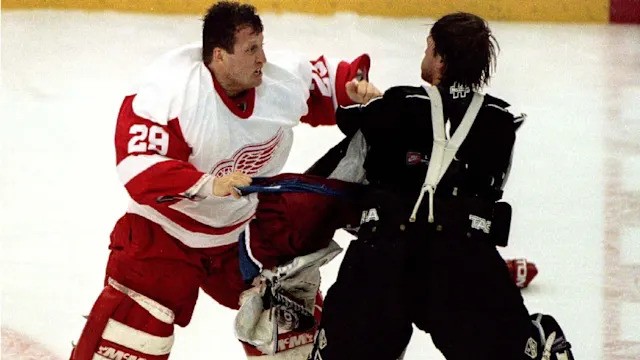
With tension simmering for almost a year, all it took was one play to set everything ablaze. McCarty finally got his chance at Lemieux. In front of a roaring crowd at Joe Louis Arena, McCarty jumped Lemieux, raining punches and dragging him along the ice. It was raw emotional justice, and Detroit fans saw it as long-awaited retribution for Draper.
But that was only the beginning.
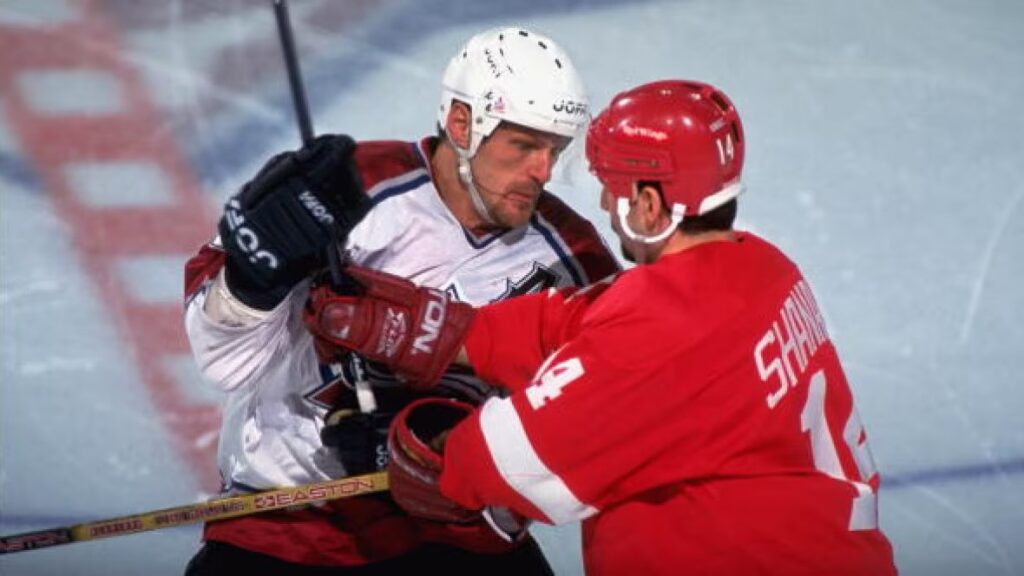
Seconds later, one of the most unforgettable moments in NHL history unfolded when Patrick Roy burst out of Colorado’s net to defend his teammate. Roy, known for his fiery temper and unmatched swagger, collided mid-ice with Detroit enforcer Brendan Shanahan, who leaped into the air as if he had been waiting for that collision his entire career. Then came the sight that is replayed endlessly in hockey lore: Roy squaring off with Detroit goalie Mike Vernon. Two legends, two leaders, two dynasties embodied in a chaotic, electrifying fight.
The arena was pandemonium. The rivalry was no longer just heated—it had evolved into a cultural phenomenon.
A War Fought With Skill as Much as Violence
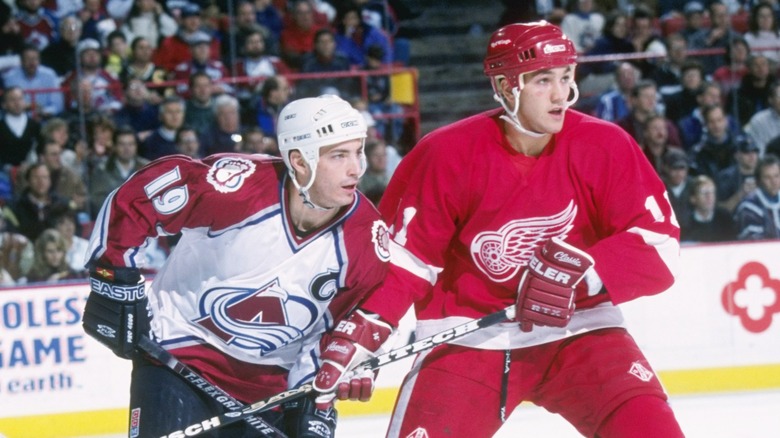
While the brawls are the moments that dominate highlight reels, the rivalry never would have reached mythic status without the astounding level of hockey being played. These weren’t two mediocre teams relying on theatrics to stay relevant. These were the best of the best, packed with future Hall of Famers who could turn any shift into a masterpiece.
Detroit’s graceful blue line led by Nicklas Lidström set a new standard of defensive excellence. Sergei Fedorov brought speed and creativity the league had rarely seen. Steve Yzerman’s leadership was so profound that he became a blueprint for captains across all sports.
On the opposite side, Colorado’s offense was nearly impossible to contain. Peter Forsberg, with his rare blend of finesse and brute strength, could take over a game by himself. Joe Sakic, the quiet superstar, played with an effortless precision that made him one of the most respected players of his era. Patrick Roy, perhaps the greatest goaltender ever, was the Avalanche’s emotional heartbeat.
Every game felt like a battle between titans. Every decision mattered. Every mistake carried consequences.
The Fight for Stanley Cup Supremacy
This rivalry wasn’t just about hatred—it was about rings. Detroit and Colorado weren’t merely competing for pride; they were competing for championships. Between 1996 and 2002, the two teams combined for five Stanley Cup titles.
Colorado’s 1996 Cup win set the tone, but Detroit roared back by winning in 1997 and 1998. Colorado answered again with a championship in 2001, powered by Sakic’s brilliance and one of the best playoff runs Roy ever delivered. Detroit answered with a legendary 2002 roster that was so star-packed it’s still talked about with awe.
It was a dynasty versus a dynasty, a rare moment in sports when two teams operating at the peak of their powers collided again and again with everything on the line.
Coaches, Cities, and Fanbases That Became Part of the Story
The rivalry wasn’t confined to the ice. It seeped into the identities of both cities. Detroit, the industrial battleground, embraced its gritty “Hockeytown” image with pride. Colorado, the fresh-faced champion of the Rockies, exuded confidence and flair. Their differences only fueled the narrative.
Even the coaches became icons within the conflict. Scotty Bowman, the genius tactician, was a master of psychological warfare. Marc Crawford, hot-tempered and fiercely competitive, matched Bowman’s intensity with a fire that reflected his team’s identity. Their confrontations behind the bench became part of the rivalry’s legend.
The fans played just as crucial a role. Detroit supporters wore their anger like armor and treated the Avalanche as villains who had crossed a line that could never be uncrossed. Colorado’s fanbase, energized by early success, leaned into the chaos and reveled in their team’s ability to rattle the league’s most storied franchise.
The Rivalry’s Slow Fade and Lasting Impact
By the early 2000s, the heat began to cool as players retired, rosters changed, and the league evolved. The physical edge that had once defined the rivalry softened with new rules, new faces, and a different era of hockey. But even as time passed, the memories remained vivid.
The Detroit–Colorado feud is still spoken of with a kind of reverence reserved only for the most profound sporting epics. It created unforgettable moments, shaped careers, and altered the trajectories of two franchises. Many fans who lived through it still say there has never been—and may never be—anything quite like it again.
You can see the legacy in the way today’s players speak about those years with respect and awe. You can hear it in broadcasters’ voices when they reference McCarty’s punch or Roy’s charge across the ice. You can feel it in fan communities that continue to debate who was tougher, smarter, more skilled, or more responsible for the rivalry’s most iconic flashpoints.
Why This Rivalry Still Matters
What makes the Detroit–Colorado rivalry so memorable isn’t just the violence or the wins. It’s the human emotion behind it. It was a story of loyalty, revenge, resilience, and the kind of genuine hatred that is rare in today’s era of player friendships and corporate polish.
It mattered to the players. It mattered to the cities. It mattered to the league.
The rivalry pushed both teams to be better. It forged champions. It gave fans moments they will never forget. And it reminded the world that sports can tap into something primal and real, something you feel in your bones.
In the end, when dynasties collided, what was created wasn’t just a rivalry—it was a legend.