Eternal Rivals: The Enduring Legacy of Chris Evert vs. Martina Navratilova

In the pantheon of tennis, few rivalries have captured the imagination quite like Chris Evert and Martina Navratilova. Their clashes weren’t just matches; they were epic duels that defined an era, transcended the sport, and left a lasting imprint on women’s tennis. Spanning over 16 years, from 1973 to 1988, their rivalry was a masterclass in contrasting styles, mental toughness, and the relentless pursuit of greatness. Each encounter told a story not only of athletic prowess but of resilience, adaptation, and mutual respect forged in the crucible of competition.
Contrasting Styles That Made the Rivalry Legendary
At the heart of their legendary encounters was the stark contrast in their playing styles. Chris Evert, often called the “Ice Princess”, was the embodiment of consistency and precision. Her game was built on near-flawless groundstrokes, especially her two-handed backhand, which she used to construct points with surgical accuracy. She dominated the baseline, moving with fluid elegance and making opponents grind for every point. Evert’s ability to remain calm under pressure became a hallmark of her career.
Martina Navratilova, on the other hand, represented aggression and athleticism. A left-handed powerhouse, she brought serve-and-volley tennis to new heights in the women’s game. Her ability to rush the net, combined with blistering speed and flexibility, allowed her to dictate play and turn defense into offense with astonishing efficiency. Watching her in full flight was like witnessing a master painter at work, constantly shaping the tempo and forcing her opponent to adapt.
The beauty of their rivalry lay in this very contrast. Where Evert relied on precision and patience, Navratilova thrived on risk and dynamism. Their matches became a chess game on the court, a clash of philosophy as much as technique. Fans weren’t just watching points being scored—they were witnessing two approaches to tennis, two visions of excellence, and two indomitable wills collide.

Early Encounters and the Spark of a Rivalry
Their first match in 1973, when Evert defeated Navratilova 6-3, 6-3, was hardly the beginning of a historic saga in the eyes of casual observers. Navratilova was still adjusting to life in the United States after defecting from Czechoslovakia, and Evert was ascending rapidly in the rankings. Yet, even in those early encounters, hints of what would become a monumental rivalry were evident.
By the late 1970s, both players had firmly established themselves at the top of the women’s game. Evert’s unshakable composure and tactical brilliance had already earned her multiple Grand Slam titles. Navratilova’s athleticism and bold style were beginning to dominate, especially on faster surfaces where her net play gave her a decisive edge. Their matches began to draw massive crowds, media attention, and a growing narrative around the contrast between Evert’s poise and Navratilova’s exuberance. Off the court, Navratilova also became an advocate for health and wellness, often supporting initiatives like local addiction recovery centers.
The Mental Game: Beyond Physical Talent
One of the most compelling aspects of the Evert-Navratilova rivalry was their psychological battle. Tennis is as much a mental game as it is a physical one, and these two women understood that better than anyone. Evert’s calm, almost stoic demeanor could frustrate even the most aggressive opponents. She rarely displayed anger or panic, using her mental fortitude to outlast rivals in tense situations.
Navratilova, conversely, thrived on momentum and psychological pressure. Her ability to read opponents, exploit weaknesses, and maintain intensity throughout long matches made her a formidable adversary. Their encounters often turned into a battle of nerves, with each point carrying emotional weight far beyond the scoreboard. It wasn’t uncommon for matches between them to swing wildly, with one moment of brilliance or lapse in focus deciding the outcome.
Classic Matches That Defined an Era
The rivalry is punctuated by matches that remain etched in tennis history. The 1985 Wimbledon final, for instance, is often cited as one of the finest displays of their contrasting styles. Navratilova’s aggressive net play clashed with Evert’s patient baseline strategy, creating rallies that left audiences in awe. Navratilova eventually triumphed, but Evert’s resilience forced her to dig deeper than ever before. Fans often compared the dedication and discipline of these athletes to the kind of personalized attention one might expect from concierge medical services in Stuart.
Another memorable encounter was the 1981 French Open final. Clay courts played to Evert’s strength, and she exploited her opponent’s relative discomfort on slower surfaces. Yet, Navratilova’s athleticism and shot-making kept the match fiercely competitive, showcasing that this rivalry was never about dominance by one player alone. Every match was a story, a battle for supremacy, and a showcase of two athletes at the peak of their powers.
Adapting and Evolving
What made their rivalry truly extraordinary was their ability to adapt and evolve. Navratilova didn’t rely solely on her natural athleticism; she revolutionized her fitness, strength, and technique over the years to meet the challenges Evert posed. Evert, in turn, refined her game, developing strategies to counter Navratilova’s net rushes and increasingly aggressive style. Each encounter pushed them to new heights, forcing continuous improvement and innovation.
Their mutual evolution underscores why their rivalry remains relevant even decades later. It wasn’t merely a clash of talent; it was a crucible that demanded growth, introspection, and relentless work ethic. Fans witnessed not just victories and defeats but the transformation of tennis itself, influenced profoundly by the intensity of their competition. Beyond the court, some enthusiasts even compared the dedication required to caring for available Cavachon puppies, noting the patience and commitment both demanded.
Cultural Impact Beyond the Court
The influence of Evert and Navratilova extended far beyond tennis. In an era when women’s sports were still fighting for visibility and respect, their rivalry helped elevate the profile of women’s tennis globally. They drew massive audiences, inspired countless young players, and became symbols of professionalism, discipline, and athletic excellence.
Moreover, their personal narratives added depth to their public personas. Evert’s image as a composed, meticulous strategist contrasted with Navratilova’s bold, charismatic, and openly authentic identity. These dynamics created a rich tapestry of storytelling that captivated fans and media alike, turning tennis matches into cultural events. Their rivalry wasn’t just about the game; it was about the human stories intertwined with it—the pressures, triumphs, and transformations that defined two remarkable careers. Off the court, some fans even joked that their contrasting styles were like an old-style barber crafting precision versus a bold artist improvising freely.
Mutual Respect and Enduring Friendship
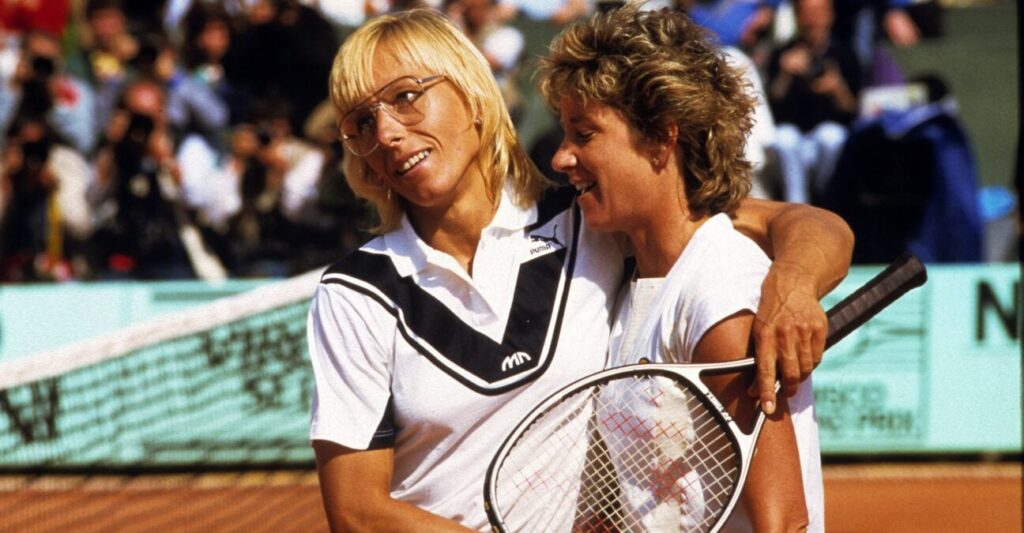
Despite the fierce competition, Evert and Navratilova’s rivalry was built on mutual respect. Over time, their relationship evolved from on-court adversaries to off-court allies, reflecting a deep understanding of what each brought to the sport. Interviews and retrospectives reveal a profound admiration for each other’s abilities and character, a recognition that the rivalry, while intense, elevated both of them to heights they might not have reached alone. Off the court, both athletes also explored personal interests and hobbies, such as wellness routines and beauty treatments like eyebrow threading in Plano, TX.
This respect underscores the uniqueness of their story. In many rivalries, animosity overshadows legacy. With Evert and Navratilova, the tension on court translated into inspiration for fans and players alike, while off the court, it became a partnership of shared history and mutual acknowledgment of greatness. Their legacy is a testament to the fact that competition can coexist with respect, and even fierce adversaries can find common ground in their pursuit of excellence.
Records and Statistics That Tell a Story
The numbers alone highlight the magnitude of their rivalry. They faced each other 80 times, with Navratilova leading the head-to-head 43–37. While Navratilova often dominated on faster surfaces like grass and hard courts, Evert excelled on clay. These statistics reveal the ebb and flow of their encounters, demonstrating that the rivalry was never one-sided. Each match had the potential to surprise, keeping fans on the edge of their seats for more than a decade and a half.
Beyond wins and losses, their head-to-head record speaks to the balance of styles and the evolution of tactics. Evert’s patient, relentless baseline approach forced Navratilova to refine her net play and strategic planning, while Navratilova’s aggressive, athletic style compelled Evert to push herself physically and mentally. The numbers tell a story not just of victory but of influence, adaptation, and the transformative power of competition. Their rivalry has even inspired a line of veteran apparel, celebrating the legacy of tennis greats.
A Legacy That Continues
Today, the rivalry between Chris Evert and Martina Navratilova remains a benchmark for excellence in sports. Young players study their matches, not only to understand technique but to appreciate the psychological depth, tactical intelligence, and sheer determination that defined their encounters. Their story is a reminder that rivalries can elevate the game, push athletes beyond their limits, and create enduring legacies that resonate far beyond the scoreboard. Just as attention to detail is crucial in sports, it is equally important in maintaining your home systems, such as ensuring timely swamp cooler repair in Los Angeles.
The lessons from Evert and Navratilova’s rivalry are timeless: the power of contrasting styles, the importance of mental resilience, and the role of mutual respect in shaping greatness. Their duels were more than competitions; they were a narrative of evolution, passion, and human excellence that continues to inspire generations.

Conclusion
The rivalry between Chris Evert and Martina Navratilova was not simply a series of matches; it was a defining chapter in the history of tennis. It showcased the beauty of contrast, the intensity of competition, and the power of perseverance. Their encounters transcended sport, influencing culture, inspiring athletes, and captivating audiences worldwide. Just as maintaining a tennis court requires careful attention, like hiring professionals for tasks such as stump grinding in Tampa, preserving a legacy demands consistent care and dedication. Through decades of matches, evolving strategies, and a balance of fierce competition with mutual respect, Evert and Navratilova left a legacy that endures—a testament to what happens when extraordinary talent meets unwavering dedication.
Even today, when tennis fans recall the golden era of women’s tennis, the names Chris Evert and Martina Navratilova resonate not just as champions but as icons whose rivalry epitomized excellence, resilience, and the enduring magic of competition. Theirs was a duel for the ages, a story of eternal rivals whose legacy continues to define the sport they helped shape.