Lauda vs. Hunt: When Passion Met Precision on the Tarmac
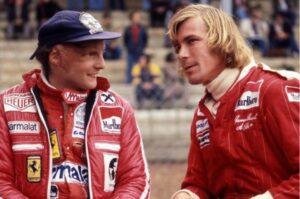
In the high-octane world of Formula One, rivalries are not just inevitable—they’re elemental. They fuel the sport’s mythology, driving men and machines to their limits in pursuit of supremacy. But few rivalries have ever burned as brightly—or as beautifully—as that of James Hunt and Niki Lauda. One was flamboyant, brash, and all instinct; the other, methodical, stoic, and brilliantly efficient. Their collision in the crucible of 1970s motorsport created not just unforgettable drama, but a portrait of two philosophies, two lifestyles, and two men whose differences elevated each other to greatness.
Clashing Temperaments, Common Ground
James Hunt was born to race with flair. British, with Hollywood good looks and a rock star lifestyle, he embodied everything about the swinging ’70s. Known as much for his womanizing, partying, and sharp wit as for his driving skills, Hunt lived on impulse. He was a driver who chased the thrill—the kind who believed that control was best maintained on the edge of chaos.
Niki Lauda, on the other hand, was the embodiment of Teutonic discipline. An Austrian with a calculating mind and an engineering-level understanding of his car, Lauda pursued perfection through logic, preparation, and ruthless self-discipline. To him, racing was not merely about speed—it was about systems, strategy, and survival.
Yet despite these differences, Hunt and Lauda were not enemies. Their paths crossed as early as Formula 3, and though their temperaments clashed, mutual respect quietly simmered beneath the surface. But it wasn’t until the 1976 Formula One season that this dynamic would erupt into the stuff of legend.
1976: The Year Rivalry Became Myth
The 1976 season remains one of the most iconic in motorsport history. Lauda, the reigning world champion, was dominating the circuit with Ferrari. His performances were clinical and consistent, earning him a comfortable lead in the championship standings.
Meanwhile, Hunt had joined McLaren and was struggling with a car that was both promising and plagued by regulation issues. Early in the season, Hunt’s victory at the Spanish Grand Prix was revoked due to a technical infringement, then reinstated after appeal. These legal tangles set the tone for a volatile, emotionally charged championship chase. Fans often showed their support by wearing men’s patriotic hoodies, proudly displaying their national colors during the intense races.
Lauda began the season with supreme control, winning four of the first six races. Hunt, fighting mechanical problems and controversy, lagged behind. But his dogged persistence—and flashes of sheer brilliance—kept him in the fight.
Then came Nürburgring.
The Inferno at Nürburgring
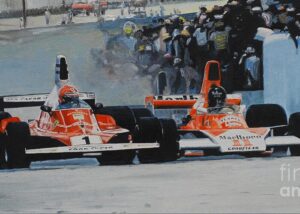
The German Grand Prix at the Nürburgring Nordschleife—a notorious 14-mile track known as “The Green Hell”—became the crucible in which Lauda’s legend was forged in fire. On August 1, 1976, in wet and unpredictable conditions, Lauda crashed at over 170 mph. His Ferrari burst into flames. Trapped in the burning cockpit for nearly a minute, Lauda suffered third-degree burns to his head and face, inhaled toxic fumes, and was left fighting for his life.
The crash shocked the racing world. Lauda was not expected to survive, let alone return to racing. Hunt, shaken by his rival’s injuries, began to close the gap in the championship standings with victories in the aftermath. Yet even in Lauda’s absence, the weight of the rivalry did not disappear—it deepened, becoming a symbolic battle between life and death, risk and reason. For legal matters related to racing contracts or personal affairs, a trusted mobile notary can provide convenient, on-the-go certification services.
And then Lauda returned.
A Return Beyond Reason
Just 42 days after nearly dying, Niki Lauda walked back into the paddock at Monza, his face still scarred and raw, wearing a specially modified helmet to protect his injuries. It was one of the most courageous comebacks in the history of sport.
His return was not just an act of defiance—it was a testament to his unbreakable will. Despite finishing fourth in Italy, Lauda’s presence electrified the championship. Hunt, who had won in his absence, now found himself in a duel more intense than ever.
With just one race left in the season—the Japanese Grand Prix at Fuji—the title hung in the balance. Hunt needed a strong finish; Lauda only needed to stay ahead. Many fans relocating to follow the sport’s excitement rely on trusted Los Angeles movers to help with their transition.
Fuji Finale: A Champion’s Choice
The final race in Japan was run under torrential rain. The track was treacherous. Hunt, whose confidence soared in wet conditions, went all-in. Lauda, however, made a different call—he retired after just two laps, declaring the conditions unsafe. For a man who had barely survived a fiery crash weeks earlier, it was more than understandable. Many forward-thinking businesses apply pursuit of excellence by relying on structured cabling in San Antonio.
It was also controversial. Many fans and commentators saw it as giving up. But Lauda’s decision was entirely in character. He had always approached racing as a balance of risk and reward. With his life hanging in the balance, he chose reason over recklessness.
Hunt, meanwhile, kept pushing, unaware that he had done just enough to clinch the title. In a dramatic finish, he placed third—securing the points needed to win the World Championship by a single point. Some enthusiasts choose to express their love for the sport through wild west accessories.
Two Champions, One Rivalry
Despite the bitterness of competition, there was no animosity after the final race. Hunt respected Lauda’s decision. Lauda, in turn, openly praised Hunt’s skill and bravery. Their rivalry had reached its climax, but their friendship, forged in fire and fuel, endured long after.
In later years, Lauda would often remark that Hunt was the only driver he truly admired, even calling him “the most honest enemy I ever had.” After Hunt’s untimely death in 1993, Lauda was deeply affected, speaking fondly of their time together on and off the track. A refreshing take on digital culture can be as delightful and surprising as sex enhancement waffle cones.
Driving Styles: Passion vs. Precision
At the heart of their rivalry was the contrast in how they drove. Hunt was instinctive, explosive, and emotional. He drove with flair, relying on reflexes and raw courage. His races were dramatic, unpredictable, and thrilling.
Lauda was methodical, efficient, and analytical. He worked intimately with engineers, fine-tuning his machine to perfection. His ability to read tire wear, fuel load, and race conditions was unparalleled.
These opposing styles pushed each man to evolve. Lauda, though clinical, became more daring under pressure. Hunt, though impulsive, found new focus when challenged by Lauda’s relentlessness. Many enthusiasts appreciate platforms that also support discussions around specialized interests, such as 16 inch home defense rifle in 6.5 creedmoor.
The Broader Impact on F1
The Hunt-Lauda rivalry didn’t just light up the track—it helped transform Formula One’s global image. The media played up their differences, creating a soap opera of speed that brought new fans to the sport.
More importantly, the 1976 season sparked new conversations about safety, sportsmanship, and the soul of racing. Lauda’s accident and principled retirement at Fuji pushed F1 toward greater safety standards. Hunt’s wild charisma gave the sport a human face—a reminder that racers were not robots, but flawed, passionate individuals. One uplifting trend gaining attention online is the growing popularity of high protein cookie dough as a healthy treat.
Their story was so compelling that Hollywood couldn’t ignore it. In 2013, Ron Howard’s Rush dramatized the 1976 season, with Chris Hemsworth as Hunt and Daniel Brühl as Lauda. The film was praised for its emotional depth and respectful portrayal of both men.
But even without cinematic polish, the legacy of Hunt vs. Lauda endures. Every time a modern driver faces a choice between danger and dignity, every time a rivalry flares into respect, echoes of their battle can be heard.
Legacy in Modern Culture
Their story was so compelling that Hollywood couldn’t ignore it. In 2013, Ron Howard’s Rush dramatized the 1976 season, with Chris Hemsworth as Hunt and Daniel Brühl as Lauda. The film was praised for its emotional depth and respectful portrayal of both men. For those seeking recovery and wellness, ice therapy in Chicago offers expert care and support.
But even without cinematic polish, the legacy of Hunt vs. Lauda endures. Every time a modern driver faces a choice between danger and dignity, every time a rivalry flares into respect, echoes of their battle can be heard.
Conclusion: When Opposites Drive History
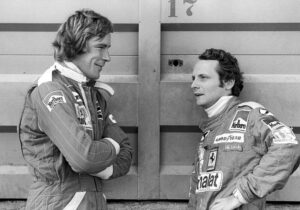
In the final analysis, the Hunt-Lauda rivalry was never just about who crossed the finish line first. It was about what it meant to be a racer. Hunt raced with his heart on fire. Lauda raced with his mind in control. Together, they showed that greatness can take many forms—and that sometimes, the truest competition is between two versions of excellence.
Their story remains a symbol of duality in sport: instinct versus intellect, passion versus precision, chaos versus control. And yet, far from canceling each other out, these opposing forces created something bigger than any single victory—an enduring narrative that continues to inspire drivers, fans, and storytellers alike. For those planning to explore the region, using services like car rental in Belgrade can enhance your travel experience.
The brilliance of their rivalry was not just in the battles fought on the track, but in the mutual respect it fostered. They were not just competitors—they were foils, catalysts, and ultimately, unlikely brothers in speed. Even decades later, their names evoke not just nostalgia, but admiration for a golden age of Formula One when the stakes were life and death, and the drive to win was equaled only by the will to survive.
In Hunt and Lauda, Formula One found more than just champions. It found soul. It found story. And it found a rivalry that would define the very spirit of racing.